
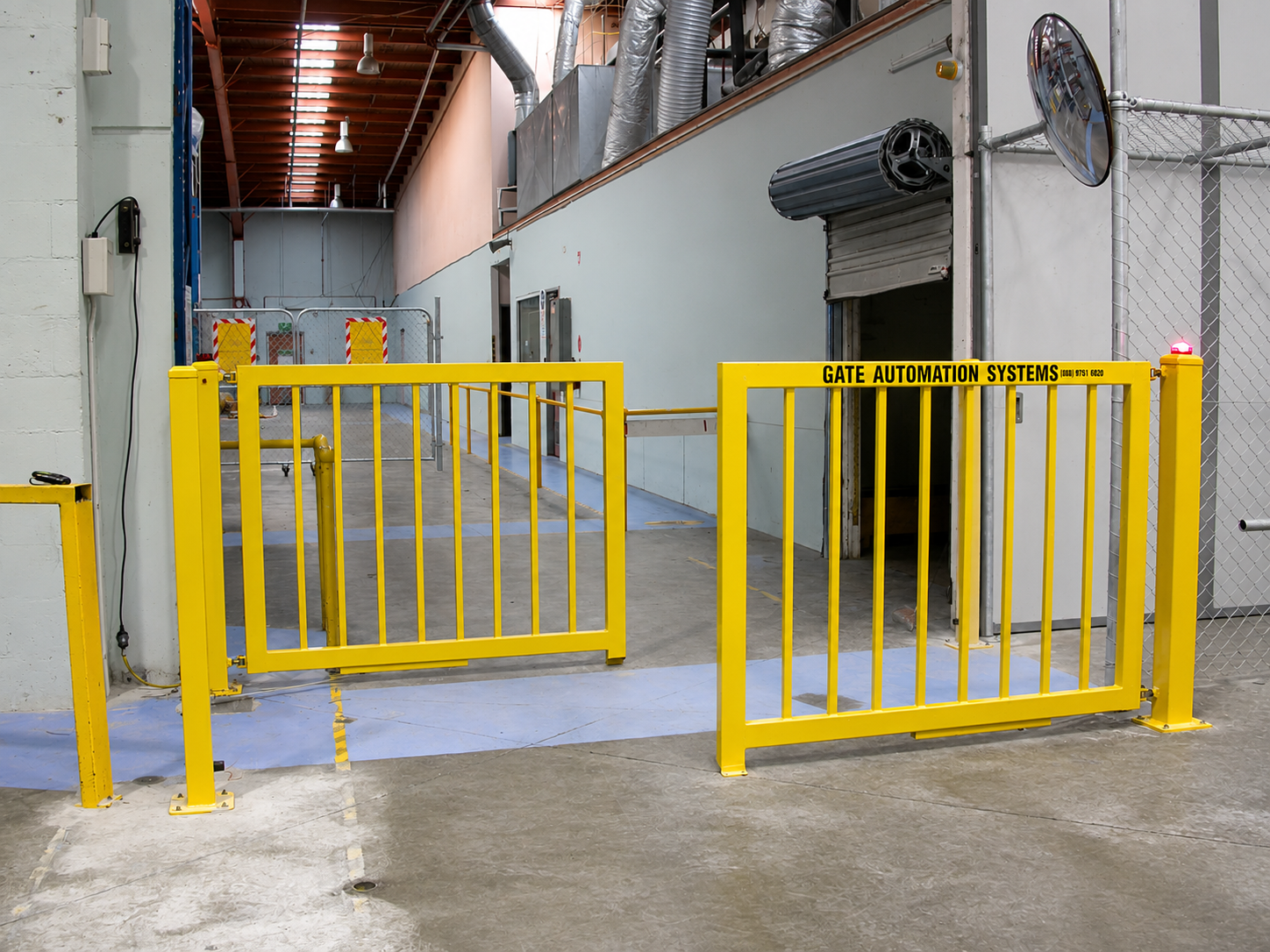
Keep pedestrians and forklifts apart.
Motorised industrial safety gates coordinate shared crossings by opening the pedestrian route while closing the conflicting forklift route.
Discuss your crossing ↗
The gate is one part of the safety system.
The useful specification includes gate width, hinge choice, release method, control integration and what should happen during power loss or emergency conditions.
- Width
- Configured to the opening and the traffic/pedestrian route.
- Operation
- Manual or automated movement depending on the site risk and duty.
- Control
- Integrated with access control, fire alarm or plant-control logic where required.
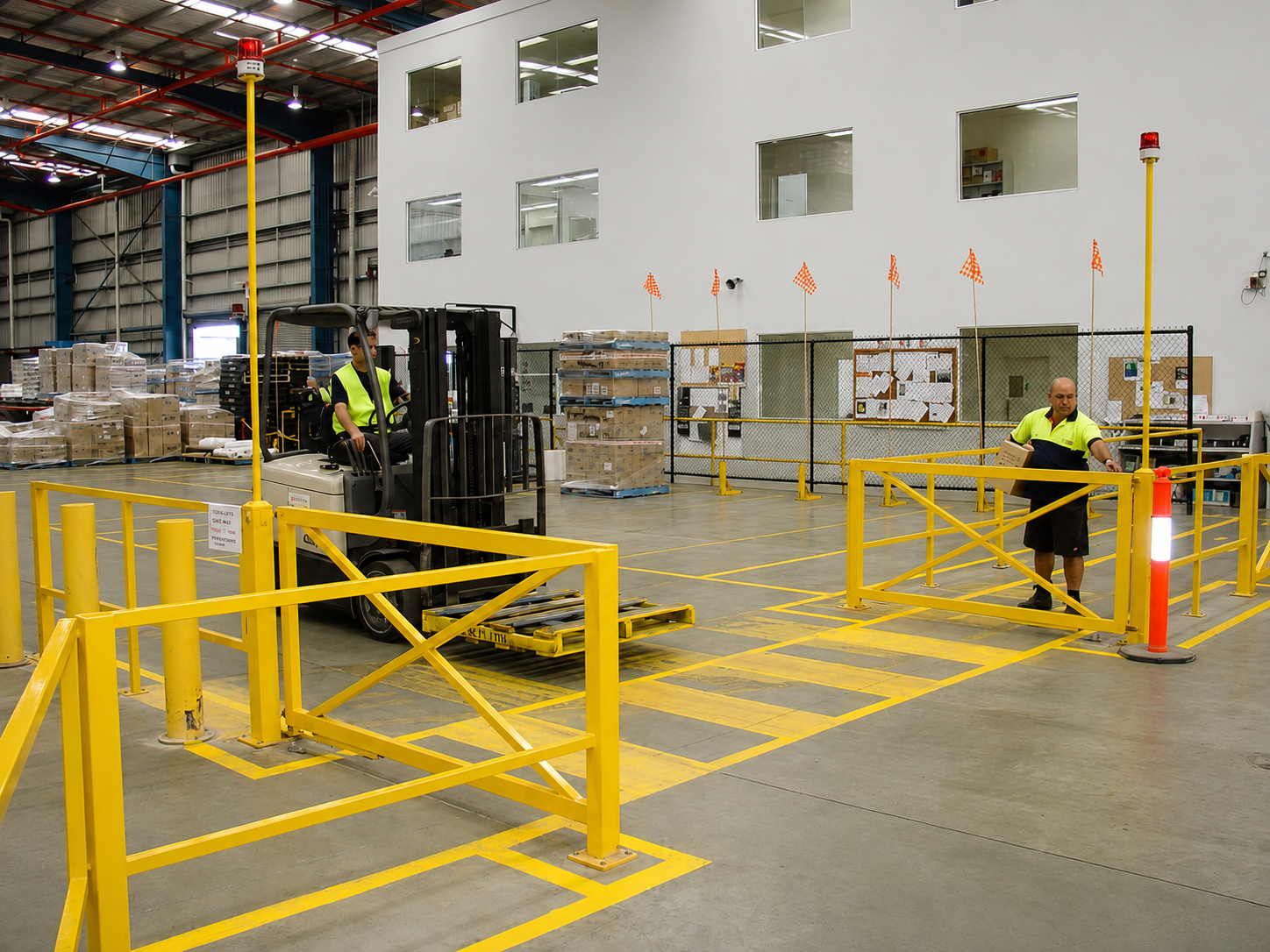
One crossing. Two protected routes.
Options and integrations.

Flashing beacon
Visible warning while the gates are moving.

Battery backup
Continued operation during a power interruption.

Access control
Release through approved credentials and controls.

Fire alarm integration
Coordinated response with emergency systems.

Heavy-duty hinges
Adjustable bearing hardware for repeated use.

Custom gate widths
Sized around the opening and traffic path.
Integration decisions belong in the first sketch.
Industrial safety gates often sit between people, plant and building systems. The release method, emergency behaviour and maintenance access should be agreed before fabrication.
- Access control release
- Fire-alarm response
- Battery backup and manual override
- Service access and inspection points
Industrial safety gates need the risk path, not just opening size.
Send the opening, pedestrian/plant movement, control requirements and any alarm or access-control integration. Gate Automation Systems can help shape the gate around the site risk.